
Demand Protection for accident repair
Protect accident-repair enquiries when the front desk or workshop is busy.
A motorist, insurer, recovery contact or prospective repair customer may call while the team is already occupied.
Capturing the right incident, vehicle and next-step context can determine whether the enquiry remains actionable when somebody becomes free.
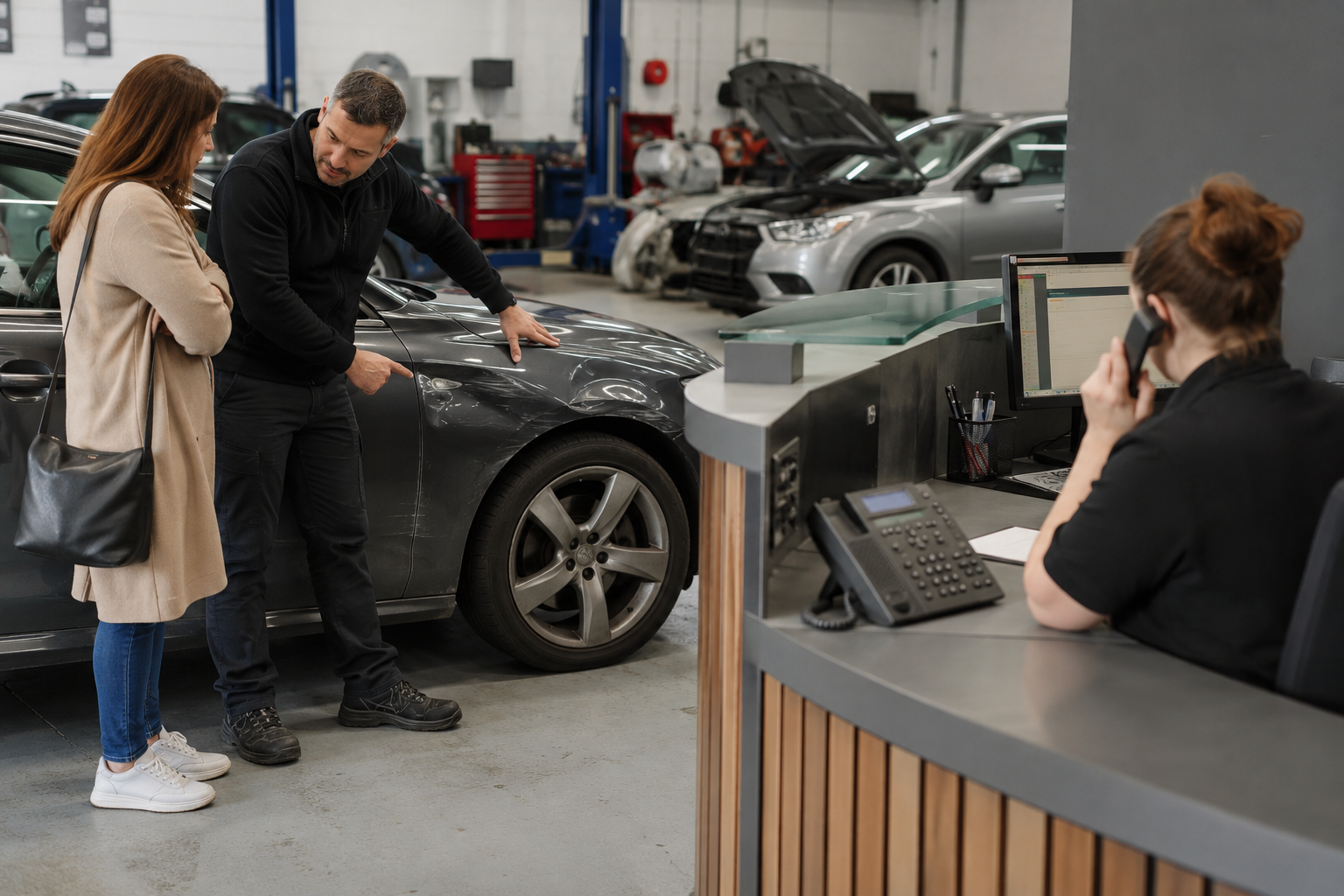
The commercial exposure
The useful opportunity is more than a caller's number.
The same front desk may hear from motorists, insurers, recovery contacts, suppliers and existing customers. When the workshop is busy, a potentially valuable repair enquiry can be recorded without the detail that makes it actionable.
Returning the call later may mean establishing the caller's role, the broad incident context, the vehicle involved and the intended next step from scratch. Until that happens, the team cannot see what deserves attention or who should own it.
A callback task preserves a number. Demand Protection preserves the context needed to decide what the business should do next.
Typical exposed moments
Where continuity can break
In accident repair, availability gaps emerge wherever customer contact meets practical workshop work and front-desk coordination.
- On the floor
The estimator is with a vehicle and its owner
Proper inspection takes attention. A second enquiry can arrive while the person best placed to understand it is occupied away from the desk.
- Busy reception
Multiple parties are coordinating the same working day
Customers, recovery contacts and other parties may all need different next steps, making a bare missed-call list particularly difficult to interpret.
- Outside hours
An accident-related enquiry arrives after closing
The workshop does not need to assess the repair immediately, but it does need enough agreed context to resume the enquiry coherently when the team returns.
The protected handover
What should survive until the team takes over
The handover retains the practical facts agreed by the business while leaving assessment, authorisation and commitments to the appropriate people.
- 01
Who is contacting the business and their role in the enquiry.
- 02
The agreed high-level incident and vehicle context needed to recognise the job.
- 03
Any location, contact or availability details included in the approved handling path.
- 04
What the caller was told and which next action was agreed.
- 05
A usable record with clear ownership for follow-up by the front desk, estimator or other responsible team member.
Clear boundaries
Repair and liability decisions remain with the responsible specialists.
DPS can organise the first contact within agreed rules. It does not improvise technical, insurance or commercial determinations.
DPS can preserve
- Identify the agreed caller and enquiry type.
- Capture defined incident, vehicle and contact context.
- Follow routing, stop and escalation rules.
- Make the next action and responsible team visible.
The team decides
- Liability, coverage or insurer authorisation.
- Repairability, method or technical assessment.
- Price, completion timing or vehicle availability commitments.
- Any decision requiring inspection or specialist judgement.
Demand Protection Review
Start with this sector’s exposed moments.
The Review traces how repair enquiries move between the front desk, estimators and workshop, then identifies where context or ownership is being lost.
30 minutes. No software demo.
- 01
Map the contact around real workshop activity
Look at when enquiries arrive, who is usually occupied and how motorist, insurer and recovery contacts are currently handled.
- 02
Define an actionable first record
Agree which high-level incident, vehicle and caller details help the team recognise and resume an enquiry without attempting an assessment.
- 03
Set ownership and decision boundaries
Establish who takes over, what can be communicated and where DPS must stop for technical, insurance or commercial judgement.
Relevant insights
Sector thinking, without the filler.
Future accident-repair insights will look at enquiry continuity between the front desk, estimator and workshop without offering repair or insurance advice.
Explore Demand Protection insightsProtect the gap
Find the exposed moments in your enquiry process.
If repair enquiries arrive while the team is inspecting vehicles or coordinating live work, the Review will show whether the context needed for follow-up is surviving.
Review your enquiry exposure